If you own or manage commercial property in Florida, your roof is both your most important protection and one of your largest capital assets — and Florida is the toughest place in the country to keep one over your head. This guide covers the three things every Florida property owner needs to understand before spending a dollar on a commercial roof: what it costs in 2026, how the major systems compare, and what the code requires to survive hurricane season.
A note on the numbers up front: commercial roofing is priced per square foot and varies enormously by system, building, and condition. Treat every figure here as a realistic planning range, not a quote. The only accurate price comes from an on-site inspection and measurement.
2026 Commercial Roofing Costs in Florida
Here's what the major commercial systems typically cost installed in Florida in 2026, expressed per square foot of roof area.
| System | Typical Installed Cost (per sq ft) | Typical Lifespan |
|---|---|---|
| TPO / single-ply | $5.50 – $12.00 | 20–30 years |
| PVC single-ply | $7.00 – $13.00 | 20–30 years |
| Modified bitumen / BUR | $5.50 – $11.00 | 15–20 years |
| Standing-seam metal | $10.00 – $18.00+ | 40+ years |
| Roof coating / restoration | $2.00 – $5.00 | 10–15 years (renewable) |
To translate that into a project number: a 25,000-square-foot warehouse roof in TPO might run roughly $140,000–$300,000 installed, while the same roof restored with a silicone coating (if it qualifies) might run $50,000–$125,000. The spread is huge because the right answer depends on your building, your roof's current condition, and how long you plan to own it.
Several factors move a Florida commercial roof up or down within these ranges:
- Tear-off vs. recover. Removing the old roof adds labor and disposal cost. Recovering over a sound existing roof, where code allows, saves both.
- Insulation and slope. Adding tapered insulation to fix ponding and improve energy performance adds cost but pays back in roof life and cooling savings.
- Roof complexity. Lots of penetrations, curbs, skylights, and rooftop equipment mean more detailing labor.
- Wind zone and code. High-Velocity Hurricane Zone requirements (Miami-Dade and Broward) raise material and attachment costs — for good reason.
- Access and height. Occupied buildings, tight sites, and tall structures affect staging and safety costs.
Comparing the Major Commercial Roofing Systems
Cost is only half the decision. The right system depends on your building's use, budget, and how long you'll hold it. Here's how the major options stack up for Florida.
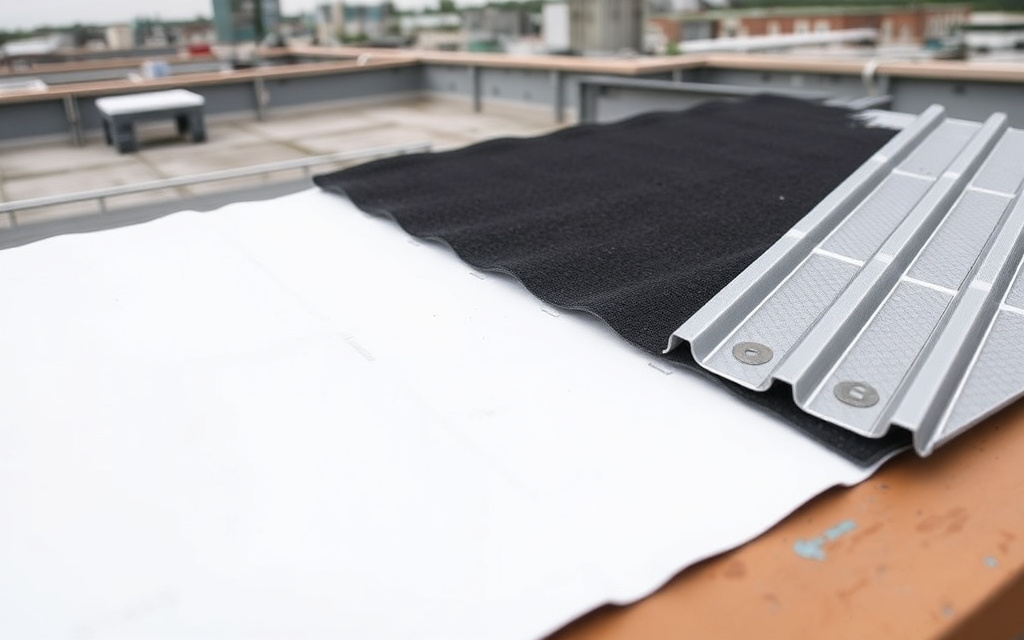
TPO and Single-Ply (the Florida favorite)
TPO is the most popular commercial flat-roof system in Florida, and for good reason. Its bright white, reflective surface bounces solar heat instead of absorbing it — a real energy saving in a state where the AC runs most of the year — and its heat-welded seams form a single, monolithic waterproof surface with no adhesive to fail in the sun. PVC, a close cousin, adds excellent chemical and grease resistance, making it the go-to where kitchen exhaust or industrial chemicals hit the roof.
Single-ply is cost-effective, energy-efficient, and available in thicknesses (45, 60, and 80 mil) and attachment methods rated for Florida wind zones. For most warehouses, retail centers, and office buildings, it's the default choice — and often the smartest one.
Modified Bitumen and Built-Up (rugged redundancy)
Modified bitumen is the modern evolution of the classic built-up "tar and gravel" roof. Both are multi-ply systems — layer upon layer of reinforced membrane — so there's no single point of failure. That redundancy makes them a strong choice for roofs with heavy foot traffic and lots of rooftop equipment service, where a single-ply membrane might get punctured. Topped with a reflective cap sheet or coating, mod-bit holds up well to Florida rain and heat, though it typically doesn't match TPO's or metal's lifespan.
Metal (the long-haul champion)
For the right building, nothing outlasts commercial metal. A standing-seam metal roof routinely serves 40 years or more, resists the UV that degrades membranes, and — with its concealed fasteners and clipped panels — delivers outstanding hurricane wind-uplift performance. It costs more up front, but for an owner planning to hold a building for decades, the lifespan math often makes metal the lowest total-cost option. It's especially well-suited to warehouses, distribution centers, and industrial buildings.
Coatings and Restoration (extend, don't replace)
If your existing roof is structurally sound and dry, a fluid-applied silicone or acrylic restoration coating can seal leaks, add a reflective layer that cuts cooling costs, and extend the roof's life by 10–15 years — often at a fraction of a full replacement, and frequently with a renewable warranty. Silicone handles Florida's ponding water and UV especially well. Restoration isn't right for every roof (a saturated or structurally failing roof needs replacement), but when a roof qualifies, it's the highest-value option on the board.
The Part That Matters Most: Florida Hurricane Codes
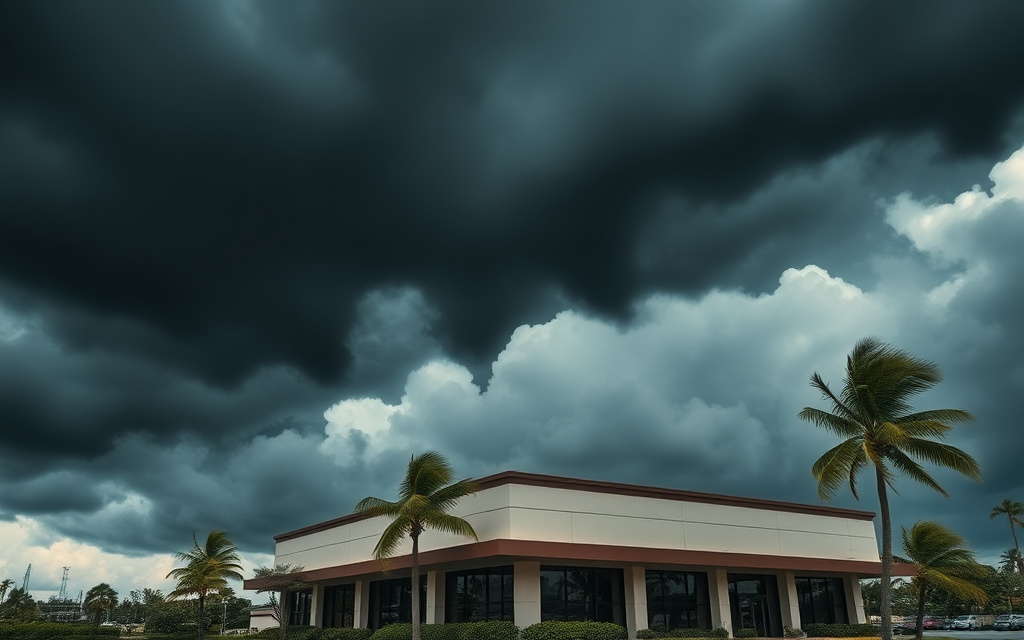
Here's what separates a Florida commercial roof from one anywhere else: wind rating isn't optional — it's the law, and it's the difference between a roof that survives a hurricane and one that peels off and takes your building's contents with it.
The Florida Building Code
The Florida Building Code (FBC) sets the wind-uplift, attachment, and material requirements for every commercial roof, based on the building's location, height, and exposure. A new roof or re-roof must be engineered and installed to those requirements — the correct membrane thickness or panel gauge, the right fastening pattern, and code-compliant edge metal — and it must pass inspection. This is not a place to cut corners; the attachment is what keeps the roof on the building when the wind loads spike during a storm.
Miami-Dade NOA and the High-Velocity Hurricane Zone
Miami-Dade and Broward counties are designated High-Velocity Hurricane Zones (HVHZ), and they enforce the most stringent roofing standards in the United States. In the HVHZ, roofing products generally must carry a valid Miami-Dade Notice of Acceptance (NOA) — certification that the product has passed rigorous wind and impact testing. Even outside the HVHZ, an NOA is a strong indicator of hurricane-grade performance, and a good contractor will specify NOA-approved assemblies where appropriate across the state.
Why This Protects Your Bottom Line
Beyond safety and code compliance, a properly wind-rated roof affects your finances in two direct ways. First, it's what stands between a passing storm and a catastrophic loss of roof, building interior, and business continuity. Second, a documented, code-compliant, wind-rated roof supports a stronger position with your property insurer — and a roof that fails because it wasn't installed to code can jeopardize a claim entirely. Investing in code compliance is investing in the resilience of the whole asset.
Repair, Restore, or Replace? How to Decide
One of the most common questions we hear is whether to repair, restore, or fully replace an aging commercial roof. The honest answer depends on condition:
- Repair when the roof is generally sound and the problem is localized — a failed seam, a cracked flashing, a clogged drain. Chasing individual leaks on a roof that's fundamentally fine is the right, cost-effective call.
- Restore when the roof is structurally sound and dry but aging and tired. A restoration coating renews the surface, seals minor issues, adds reflectivity, and buys 10–15 years at a fraction of replacement cost.
- Replace when you're facing repeated leaks, widespread membrane failure, trapped moisture in the insulation, or a roof at the end of its service life. At that point, patching and coating are throwing good money after bad, and a full re-roof resets the clock with decades of protection.
A thorough inspection — and, where warranted, a moisture survey — is what tells you which category your roof is really in. Any contractor who recommends a full replacement without inspecting for moisture, or a coating without checking whether the roof qualifies, is guessing with your money.
Energy and Cool Roofs: A Florida Advantage
In a climate where air conditioning runs nearly year-round, your roof is an energy decision as much as a weatherproofing one. A dark roof absorbs solar heat and pushes it straight into the building, driving up cooling costs and overworking rooftop HVAC units. A reflective "cool roof" — a white TPO or PVC membrane, a reflective metal finish, or a light-colored restoration coating — bounces a large share of that solar energy back to the sky, and the surface can run 50 to 80 degrees cooler on a summer afternoon.
That reflectivity translates into measurable savings on cooling bills, less strain (and longer life) for your HVAC equipment, and often eligibility for energy-efficiency programs and rebates. Over the life of a Florida commercial roof, the cumulative energy savings from a cool-roof surface can offset a meaningful portion of the installation cost. When you're comparing systems, factor the energy performance in — a slightly more expensive reflective system can be the cheaper choice once you account for years of lower cooling bills.
Common Florida Commercial Roof Problems
Florida's climate produces a predictable set of commercial-roof failures. Knowing them helps you spot trouble early:
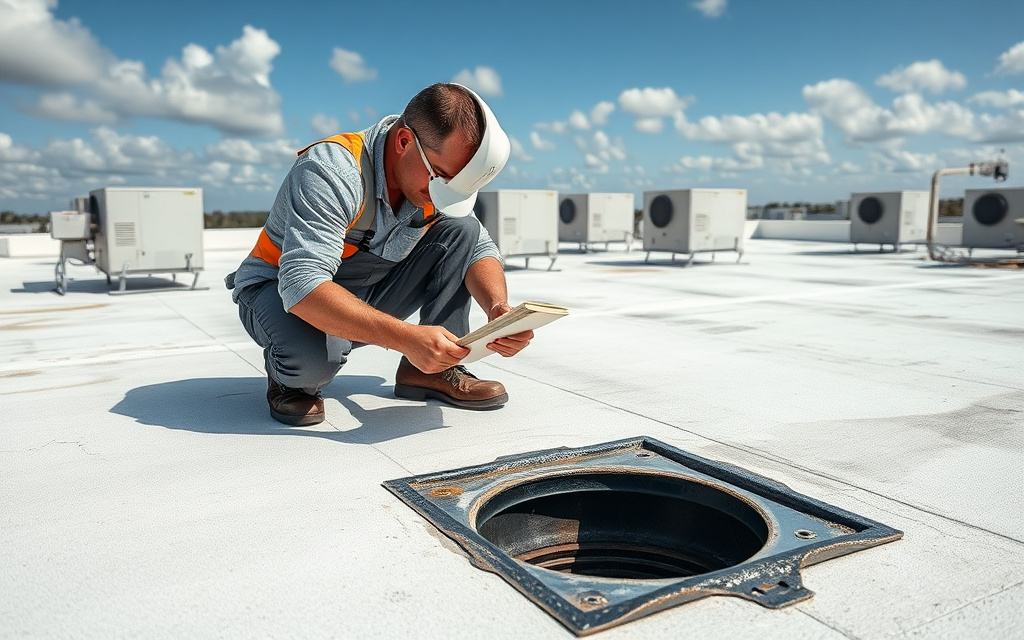
- Ponding water. Water that sits on a flat roof more than 48 hours after rain — from inadequate slope, clogged drains, or sagging insulation — accelerates membrane breakdown in the heat, adds structural load, and voids many warranties. It's one of the most common and most preventable problems we see.
- UV and heat degradation. Relentless sun dries out and embrittles asphalt-based systems and uncoated membranes faster than in cooler climates, leading to cracking and shrinkage.
- Seam and flashing failures. The seams, curbs, and penetrations are where most leaks start. Wind-driven rain exploits any weak weld or tired flashing.
- Wind and storm damage. Even short of a hurricane, Florida's frequent thunderstorms and gusts lift edges, loosen fasteners, and drive debris across roofs.
- Blistering and moisture intrusion. Trapped moisture beneath the membrane expands in the heat, forming blisters that eventually open into leaks.
Nearly every one of these is far cheaper to prevent or catch early than to repair after it has spread — which is the entire argument for regular inspection and maintenance.
What to Look for in a Florida Commercial Roofing Contractor
Not every roofer is equipped for commercial work in Florida, and choosing the wrong one is an expensive mistake. Look for:
- Commercial specialization. Commercial flat and low-slope roofing is a different discipline from residential shingles — different systems, different detailing, different project management. Choose a contractor who does commercial work as their focus.
- Florida code and NOA fluency. Your contractor should speak comfortably about wind-uplift requirements, attachment patterns, and — in the HVHZ — Miami-Dade NOA products, and should handle permitting and inspection as a matter of course.
- Manufacturer certification. Certified installers unlock the strongest material warranties, and certification signals that crews are trained to install the system correctly.
- Honest assessment. A trustworthy contractor inspects thoroughly, checks for moisture before recommending replacement or coating, and gives you a written report with real options — not a one-size-fits-all upsell.
- Insurance and licensing. Verify the contractor is licensed for commercial roofing in Florida and carries general liability and workers' compensation coverage.
The cheapest bid is rarely the best value on a commercial roof. A properly engineered, code-compliant roof installed by a certified crew protects a building worth far more than the roof itself — and it's what actually holds up when hurricane season arrives.
Protecting Your Investment With Maintenance
Whatever system you have, the single most cost-effective thing you can do is maintain it. Commercial roofs rarely fail all at once; they fail slowly, at neglected drains, worn seams, and failing flashings, until a small unaddressed problem becomes a major leak or a premature replacement. Regular professional inspection — at minimum twice a year, ideally before and after hurricane season — catches those issues while they're cheap to fix, and it keeps your manufacturer warranty valid (most require documented maintenance).
The math is lopsided in your favor: a maintenance program typically costs a small fraction of what premature replacement does, and it reliably adds years to a roof's life. For multi-site owners and facility managers, it also turns roof management from a series of expensive surprises into a predictable, budgeted line item.
Re-Roofing Without Shutting Down Your Business
A concern we hear constantly from facility managers is disruption: "Can you replace my roof without closing my store, office, or warehouse?" In nearly all cases, yes. Commercial re-roofs happen over occupied, operating buildings every day, and the key is planning. We phase the work by section so only a portion of the roof is open at any time, schedule the loudest phases around your operations where possible, protect interiors and rooftop equipment, and maintain safe access and clear communication throughout.
Good sequencing also manages the weather risk that's ever-present in Florida. Crews open only what they can dry-in the same day, so an afternoon thunderstorm doesn't turn into an interior flood. That discipline — never leaving the building exposed overnight — is part of what separates an experienced commercial roofer from a crew in over its head. The result is a new, code-compliant roof installed with minimal impact on your tenants, customers, and operations.
The Bottom Line on Florida Commercial Roofing in 2026
Commercial roofing in Florida in 2026 runs roughly $5.50–$18+ per square foot installed depending on the system, with restoration coatings offering a lower-cost path for roofs that qualify. TPO and single-ply dominate for good reason, metal wins on longevity, and modified bitumen delivers rugged redundancy — but the right choice always depends on your building, budget, and time horizon.
Above all, in Florida the code matters. A roof engineered to the Florida Building Code and wind ratings — with Miami-Dade NOA products where required — is what keeps your building protected and your investment sound through hurricane season after hurricane season.
One last piece of advice: don't wait for a leak to force the decision. The owners who spend the least on roofing over the life of a building are the ones who inspect proactively, act on small problems early, and plan replacements on their own schedule rather than in a crisis after a storm. A roof managed that way delivers its full lifespan and protects everything beneath it; a roof managed reactively tends to fail early and expensively, often at the worst possible moment. In Florida, where the climate gives no quarter, that proactive discipline is the single biggest lever you have on total roofing cost.
Want a straight answer on your building's roof? Request a free inspection or call us. We'll assess the roof, tell you honestly whether it needs repair, restoration, or replacement, and give you a written report and a code-compliant quote — no pressure, no obligation.